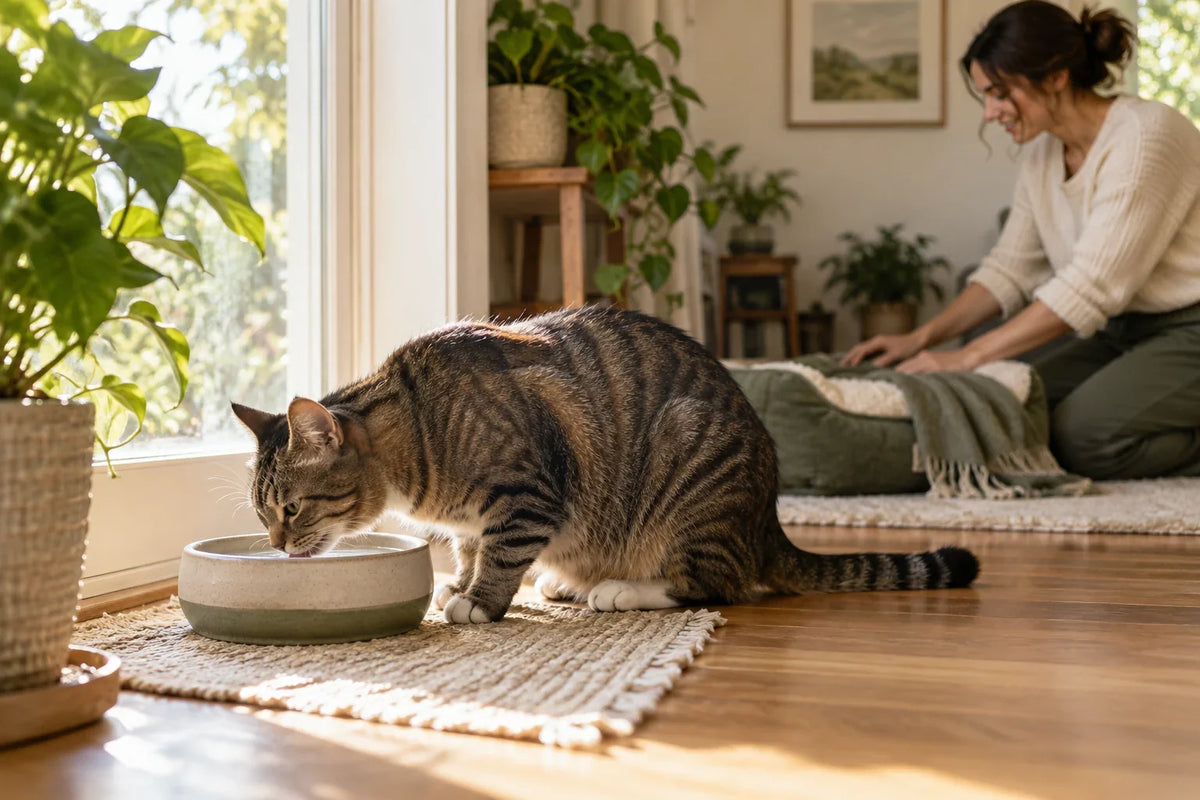
Cat weight loss plan advice goes wrong when it is copied from dieting logic. Cats are small animals with particular metabolic risks, and both rapid loss and a sudden drop in intake are dangerous rather than impressive.
This is general education rather than a diet prescription. It explains how to measure progress at home, what to change in what order, and why the plan should be set and monitored by a veterinarian.

Cat weight loss plan: why slow and measured matters
Cats that lose weight quickly, or that stop eating, are at risk of a serious liver condition. That single fact is why feline weight loss is managed more conservatively than canine weight loss.
Excess body fat in cats is also linked to other conditions including joint strain and urinary problems, so the goal is a gradual change that improves health without triggering a new problem along the way.
The practical consequence is that the rate of loss belongs to a veterinary plan rather than to an owner’s decision about portion size, and the plan should include what to do if your cat stops eating for any reason. Reviews of obesity management in dogs and cats describe how structured programmes improve outcomes (canine and feline obesity management), and specific work on feline obesity management describes the approach in cats (management of obesity in cats). Nutrition for cats is covered in the Merck Veterinary Manual.
What do owners get wrong first?
Cutting the portion sharply is the first mistake.
A sudden drop in intake is the situation that creates the liver risk described above, and it also makes the plan harder to sustain because the cat becomes demanding and the household relents.
The second mistake is estimating portions by eye, since cat food is concentrated and small errors matter in a small animal. The third is ignoring treats, including the food used to hide medication and the extras given by other household members. The fourth is free-feeding in a multi-cat home, which makes measurement impossible. Before changing anything, weigh your cat, score body condition, and measure the current intake for three days.
How do you measure progress at home?
Weigh your cat on the same scale each week.
Body condition is the second measure: run your hands along the ribs and spine and look for a waist from above and a tuck from the side, then score it the same way each month.
| Measure | How to take it | Frequency |
|---|---|---|
| Weight | Same scale, ideally before a meal | Weekly during a plan |
| Body condition | Ribs, spine, waist, tuck | Monthly |
| Food measured | Weigh the daily ration | Daily |
| Treats | Count and include in the total | Daily |
Body condition resources for owners explain the scoring method, and the Association for Pet Obesity Prevention publishes descriptions of each score. A cat that is losing weight but also losing muscle along the spine needs a plan review rather than a stricter diet. Where a canine plan is being adapted for a cat, the differences matter, and the site’s guide to helping a dog lose weight describes the canine version rather than the feline one.
What to change, in what order
Start with measurement and separation, not restriction.
First, weigh the food, set up a separate feeding space away from other cats, and use a microchip feeder if one cat needs a different amount.
Second, set the daily target with your veterinarian, including the treats, and hold it steady for two to three weeks before adjusting anything, because short-term fluctuations are normal in a cat and do not justify a change. Third, protect intake by keeping the food appealing through warmth and consistent presentation, since a cat that refuses the new portion is at risk rather than making progress. Fourth, review weight and body condition with the clinic, adjusting only in small steps. If the cat needs a different diet, transition it gradually, and the site’s comparison of wet and dry food for cats explains how format affects intake and satiety.
What should you see, and when?
Expect a slow, steady change rather than a rapid drop.
The rate of loss is set by your veterinarian, and the visible signs of progress are the cat remaining active, eating reliably, and maintaining muscle while losing fat.
If your cat refuses food for more than a day, loses weight unexpectedly fast, or becomes quieter, stop the plan and call the clinic, because those signs need assessment rather than a smaller portion or a different food. Record appetite and activity alongside weight, and note any vomiting or change in stool. Weight management also improves mobility, and cats with reduced activity benefit from environmental changes that make movement easier, which the site’s article on stiffness in cats covers.
When does weight loss need supervision?
Supervision is the default for every feline weight plan.
Contact the clinic if your cat stops eating, loses weight quickly, becomes unwell, or if the plan is not producing results despite consistent measurement of both food and treats.
Also contact the clinic before starting a plan in a cat with other conditions, including kidney disease, diabetes, or heart disease, because those change the targets. If your cat is on medication, mention it, since some drugs affect appetite and metabolism. Ask what monitoring is needed and how often to review, and ask whether a therapeutic diet is appropriate for your cat’s situation.

Label and feeding conventions for feline diets vary by market, and AAFCO consumer material explains how those rules are framed.
What to record and review
Keep one page per month.
Record the measured food, the treats, weight, body condition score, appetite, and activity, then review the trend at planned intervals rather than responding to a single weigh-in.
The record shows whether the plan is holding, and it makes any adjustment a measured decision rather than a reaction. If progress stalls, the answer usually lies in an unmeasured source of food rather than in a stricter diet, so check the household, the treats, and the other cats in the home before changing anything further.
If you want the wider framework for feline nutrition and products, read the site’s pet supplement safety guide.
FAQ
How do I help my cat lose weight safely?
Work with your veterinarian to set a target weight and a rate of loss, measure food by weight rather than by eye, and count treats within the daily total. Weigh your cat regularly and adjust only after two or three weeks at the same intake. Rapid weight loss is unsafe in cats, which is why the plan should be supervised rather than improvised.
Why is fast weight loss dangerous for cats?
Cats that lose weight quickly, or that stop eating, can develop a serious liver condition, which is one reason feline weight loss is treated differently from canine weight loss. The risk is highest when intake drops sharply. This is why a cat’s weight plan should be set and monitored by a veterinarian rather than started with a severe restriction at home.
How can I feed multiple cats when one needs to lose weight?
Separate feeding stations, supervision at mealtimes, and microchip-controlled feeders are the practical options. Feed the cat on the weight plan in a separate room with the door closed, and pick up bowls afterwards so nothing is left for the other cat to finish. Microchip feeders allow each cat to access its own portion when separation at mealtimes is not possible.
Are treats a problem for a cat on a weight plan?
They can be, because treats add energy quickly in a small animal. Count them within the daily total and use part of the measured ration as rewards instead. If treats are used for medication, ask the clinic for a lower-energy option or a different formulation so the daily budget stays accurate and the plan continues to work.