Wet and dry cat foods can both provide complete, balanced nutrition — the choice is not about one being “better” than the other. The real differences are moisture content, calorie density, cost, and how each food fits your cat’s health needs. Many cats do best on a mix of both, and the ideal ratio depends on your cat’s age, weight, and any medical conditions.
The main differences
| Factor | Wet food | Dry food |
|---|---|---|
| Moisture | High (70–80%) | Low (about 10%) |
| Calorie density | Lower per volume | Higher per volume |
| Convenience | Short shelf life once opened | Stays fresh longer; easy to leave out |
| Cost | Generally higher per calorie | Generally lower per calorie |
| Dental effects | Minimal | Minimal in most cases — kibble does not clean teeth well |
Moisture is the biggest health factor
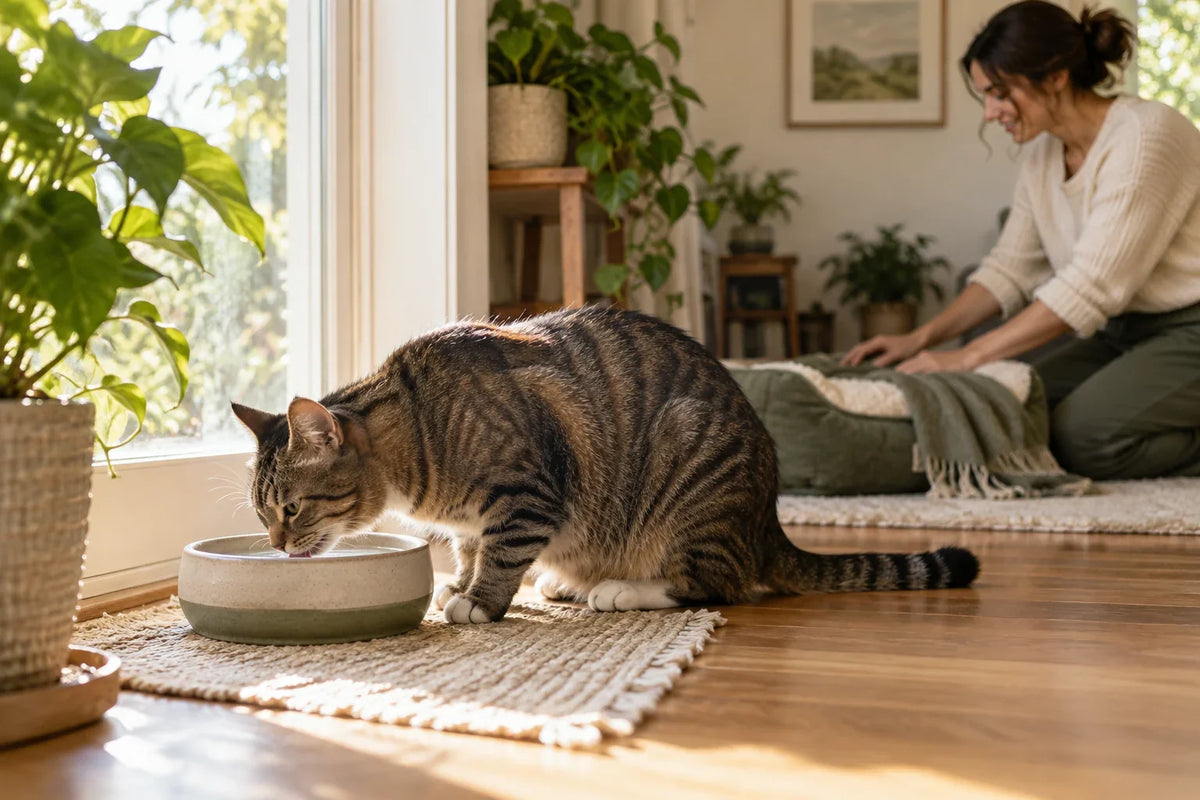
Cats evolved from desert animals with a low thirst drive, and many cats do not drink enough water. Wet food provides a meaningful portion of their daily water intake, which supports kidney and urinary tract health — a real consideration for cats prone to urinary issues or kidney disease. That said, a healthy cat on dry food who drinks plenty of water can be perfectly fine. The question is whether your cat actually drinks enough.
Calories and portion control
Because wet food is mostly water, cats need a larger volume of it than dry food for the same calories. If you free-feed dry food, portion creep is easy. If you feed wet food, measure by can or portion size and adjust to body condition. Mixing both means calculating the calories from each and adjusting portions so the total stays right.
Dental claims: keep expectations low
Regular kibble does not meaningfully clean teeth — it shatters before it scrubs. Some prescription dental diets are designed to reduce plaque and tartar, but they are specific products, not a general property of dry food. The real dental routine for cats is brushing, dental treats with proven claims, and regular vet checks.
What about the “species-appropriate” debate?
You will see strong opinions online about raw, “ancestral,” and grain-free diets for cats. The evidence-based position is simpler: choose a complete and balanced food appropriate for your cat’s life stage, from a manufacturer with quality control you can verify, and let your vet guide you if your cat has health needs. Cats are obligate carnivores, so protein should be a focus — but “grain-free” is not automatically healthier, and some cats do fine with grains in their food.
When wet food is especially useful
- Cats with kidney disease, urinary issues, or a history of dehydration
- Cats that do not drink enough water
- Senior cats with dental pain who struggle with hard kibble
- Adding variety to a picky eater’s routine
When dry food is convenient and your cat drinks well, it can absolutely be the main diet — especially with a water fountain to encourage drinking.
Practical feeding tips
- If you feed wet food, do not leave it out for more than a few hours — it spoils and attracts bacteria.
- Refrigerate opened cans and bring portions to room temperature; cold food is often refused.
- Transition slowly over 7–10 days when changing food.
- Monitor weight and adjust portions — this matters more than wet vs dry.
Ask your vet
If your cat has urinary issues, kidney disease, diabetes, or weight problems, the wet vs dry question is a medical one, not a preference. Your vet can recommend a specific type or a prescription diet matched to the condition. For a healthy cat, choose what fits your budget and your cat’s habits — and make sure the label says the food is complete and balanced for your cat’s life stage.
This article is general information, not veterinary nutrition advice. Ask your veterinarian about the best diet for your cat’s specific health needs.