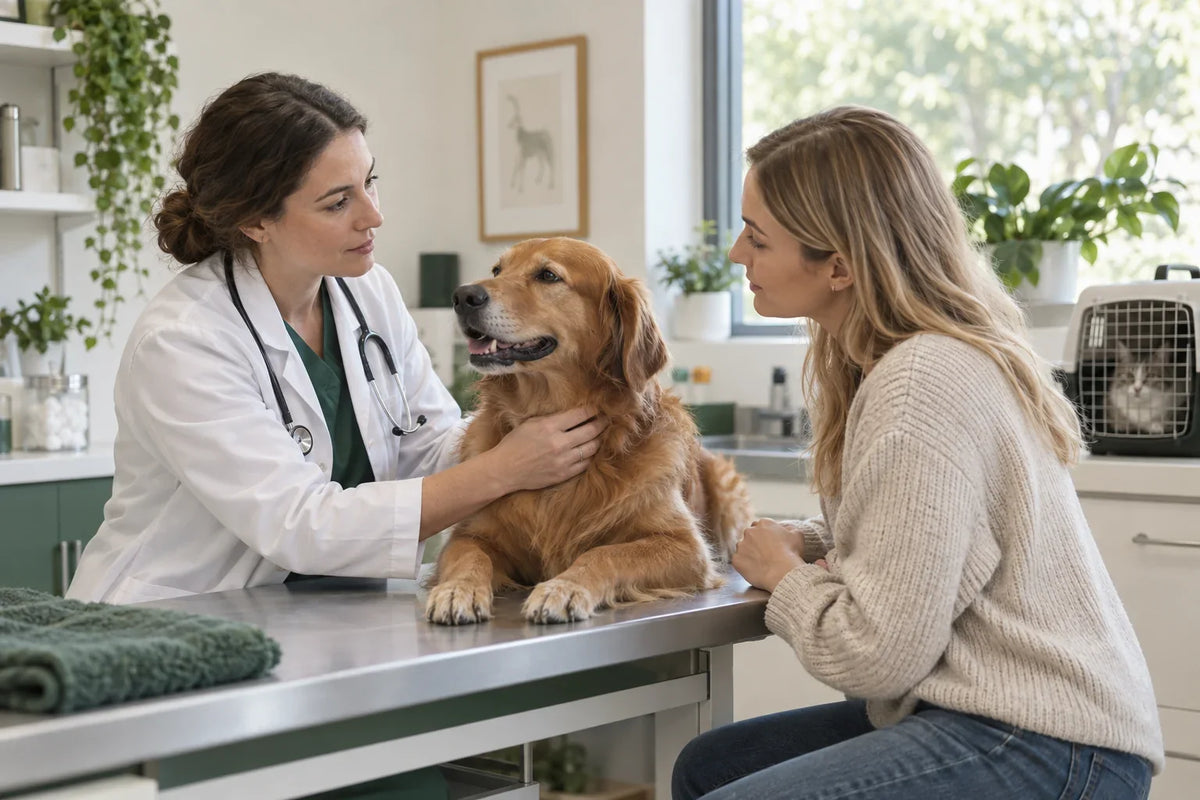
Most owners discover their dog is overweight from a comment at the vet’s office, not from a scale at home. That is understandable — a few extra pounds are hard to see on a furry body. But weight is one of the most fixable health problems a dog can have, and catching it early matters for joints, energy, and long-term health. This guide shows you how to check your dog’s body condition at home, why the vet should be part of any weight-loss plan, and what a sensible first month looks like.
Why Weight Is More Than a Number
Excess weight loads the joints, makes exercise harder, and is linked to a shorter, less comfortable life in dogs. For a dog with early joint stiffness or arthritis, losing weight often does more for comfort than any supplement — which is why veterinarians treat body condition as part of joint care, not a separate vanity metric. If your dog is already slow to rise or reluctant to jump, weight management belongs on the same conversation list as joint supplements.
The Home Check: Look and Feel, Don’t Just Weigh
Body condition is best judged by looking and feeling, because ideal weight varies wildly by breed. Two checks catch most overweight dogs:
- The rib check. Run your hands along your dog’s side. You should be able to feel the ribs through a thin layer of padding — like feeling the back of your hand — without pressing hard. If you cannot feel ribs without pushing, your dog is carrying extra weight. If the ribs poke out sharply with no padding, your dog may be underweight.
- The waist and tummy check. Look down at your dog from above. There should be a visible waist behind the ribs. From the side, the belly should tuck up toward the hind legs rather than hanging level with the chest. A straight-sided or sagging shape points to excess weight.
Other clues include a collar or harness that keeps needing loosening, less stamina on walks, reluctance to play, and heavier breathing than the pace should cause. Any single sign is worth a conversation; several together are a clear signal.
Before You Change Anything: See the Vet
A weight-loss plan should start with a veterinary visit for two reasons. First, the vet can confirm the goal weight and check for medical conditions that cause weight gain, such as thyroid problems. Second, crash-dieting a dog is genuinely dangerous — rapid weight loss can cause serious illness. The plan needs a target, a pace, and a recheck schedule, all of which should come from someone who has examined your dog.
At that visit, ask for three things: a current weight and an ideal weight range, a target daily calorie amount for weight loss, and how often to reweigh (every two to four weeks is a common starting rhythm). PetMD’s veterinarian-written guide to helping dogs lose weight describes the same foundation: a vet-approved diet plan, calorie monitoring, treats counted, and exercise matched to the dog.
The Safe Weight-Loss Basics
Once you have a veterinary plan, the mechanics are mostly about measuring and consistency:
- Weigh the food. A kitchen scale is more accurate than a cup, because cup sizes and food densities vary. Measure every meal, not most meals.
- Count treats as food. Treats, table scraps, and “just a little bite” are where most weight-loss plans quietly fail. Give treats from the daily calorie allowance or swap in low-calorie options approved by your vet.
- Reduce calories only to your vet’s target. Follow the daily calorie amount your veterinarian sets for weight loss; if progress is slower than expected, do not cut food further on your own — book a recheck instead.
- Slow down eating. Puzzle feeders or slow bowls help dogs that inhale meals feel satisfied with less.
- Move more, safely. For an overweight dog, start with longer, slower walks and low-impact activity rather than sprints and jumps. If your dog has joint pain, ask your vet which activities are appropriate.
If your dog eats a homemade diet or has medical conditions, skip the general rules and work strictly with your veterinarian or a veterinary nutritionist — calorie math for those cases is not a do-it-yourself project.
Keep a Four-Week Record
Weight loss in dogs should be gradual and steady, and the only way to know if the plan works is to measure it. A simple table helps you and your vet see the trend:
| Week | Date | Weight | Daily food (measured) | Treats given | Exercise notes | Body condition (feel ribs easily?) |
|---|---|---|---|---|---|---|
| Start | ||||||
| Week 2 | ||||||
| Week 4 | ||||||
| Week 8 |
Weigh on the same scale at the same time of day where possible — morning before breakfast works well. If there is no change after two to four weeks, do not cut food further on your own; go back to the vet and adjust the plan.
When to Check Back In
Call your veterinarian if your dog loses weight too quickly, stops eating, develops vomiting or diarrhea, becomes lethargic, or seems painful on walks. Those are signs to pause the plan, not push through it. Sudden weight loss or gain when nothing has changed is also a reason for a checkup rather than a diet change — unexplained weight shifts can point to medical problems.
The encouraging part of canine weight management is that it is measurable: ribs you can feel, a waist you can see, a dog that moves more easily on walks. Those are the real goals — not a number on a chart. Start with the vet, measure the food, count the treats, keep the four-week record, and let your dog’s energy and mobility tell you when the plan is working. For everyday feeding amounts once your dog is at a healthy weight, how much to feed a dog is the reference to keep handy.