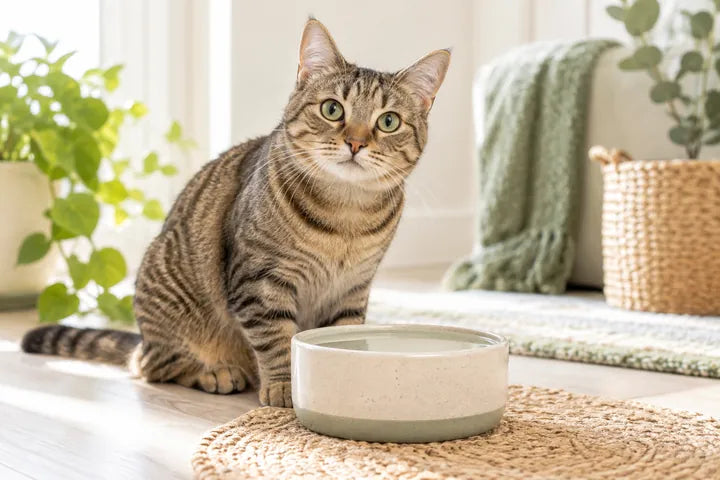
How much water should dog drink is a question with a range rather than an answer, because intake depends on diet moisture, weather, activity, and health. The number that matters most is your own pet’s baseline.
This is general education rather than a diagnosis. It explains how to measure intake in practice, which changes carry information, and when drinking becomes a clinical question.

How much water should dog drink: measuring the normal range
A frequently cited range is roughly 25 to 50 millilitres of water per kilogram of body weight per day, which is about half an ounce to one ounce per pound.
Where a pet sits in that range depends largely on food: an animal eating wet food takes in substantial moisture with meals and often drinks very little, while one on dry food drinks more to compensate.
Because of that, the practical approach is to measure both sides. Weigh or measure the water offered, subtract what remains, and record the daily total, then add what the food contributes if the diet is wet. In a multi-pet household, individual measurement is only possible if pets are separated, and shared bowls make home measurement unreliable. For cats, litter box output is the other half of the picture, since urine clumps or the weight of litter can be tracked. Changes in drinking are among the earliest signs of several conditions, and the Merck Veterinary Manual describes how kidney and urinary disorders are detected in dogs, with equivalent guidance for cats (detecting disorders of the kidneys in cats).
What do owners get wrong first?
Judging intake from the bowl is the first mistake.
Bowl size, spillage, and how often the bowl is refilled all distort the impression, and a pet that drinks a lot may simply be using a small bowl.
The second mistake is ignoring diet moisture, which can shift intake dramatically when a pet moves between wet and dry food. The third is attributing a change to weather without checking whether it persists once the weather changes. The fourth is missing the urinary side of the pattern, since increased drinking with increased urination is more informative than either sign alone. Sudden thirst with vomiting, weakness, or a distended abdomen is urgent rather than something to measure for a week. For dogs, sudden increases in thirst are a recognised clinical sign, and the differential list is described in the veterinary literature (polyuria and polydipsia in dogs).
Which changes in drinking matter?
The pattern carries the information.
A single day tells you little, and the table below pairs common changes with the explanation that most often fits them.
| Change | Likely explanation | Next step |
|---|---|---|
| Increase during hot weather or exercise | Normal | Monitor, keep water available |
| Increase after switching to dry food | Diet moisture | Include food water in the total |
| Persistent increase with more urination | Possible medical cause | Veterinary assessment |
| Decrease with reduced appetite | Illness or dental pain | Veterinary assessment |
| Sudden thirst with vomiting or weakness | Urgent | Contact a clinic now |
Medications also change drinking, and steroid treatment is a familiar example, with studies in dogs examining the pattern of increased thirst and urination during treatment (polydipsia and polyuria in treated dogs). Where kidney disease is a concern, staging frameworks guide monitoring, and the IRIS kidney staging system is used widely in practice.
What to change, in what order
Start by measuring rather than changing.
First, record water intake for three days with a measuring jug, and note the diet, weather, and activity in the same log.
Second, count urinary output where you can, using litter clumps for cats or toilet trips for dogs, since the two measures together describe the pattern. Third, if the increase tracks a diet change or the weather, keep measuring until conditions stabilise. Fourth, if the increase persists, book an appointment and bring the numbers rather than adjusting water access. Never restrict water as a way to reduce urination without veterinary advice, because that approach causes harm. For cats, the site’s comparison of wet and dry food explains how format affects water intake, and for dogs the site’s equivalent guide covers the same question.
What should you measure, and when?
Three days of measurement is the minimum useful record.
Measure water in, water left, urine output where possible, and note the diet, weather, activity, and medication, then compare with the previous week rather than with a general expectation.
If the pattern is stable and explained, monthly measurement is enough for a healthy adult pet. If something has changed, daily measurement for a week gives a clinic a much better basis for decisions than a description. Record the pet’s weight as well, because intake per kilogram is the measure that can be compared over time, and a change in weight affects the interpretation. Where the concern relates to ongoing disease, monitoring is usually ongoing, and the site’s article on signs that a dog needs a vet explains which patterns justify a call.
When does drinking need veterinary assessment?
Book if intake stays above baseline.
Also book if drinking falls, if appetite changes, if weight changes, or if your pet seems flat, because each of those changes the interpretation.
Contact a clinic urgently for sudden extreme thirst with vomiting, weakness, a swollen abdomen, or a pet that cannot keep water down. Bring your measurements, the diet, and the list of medication, then ask what the pattern suggests and whether blood work or a urine sample is warranted. Ask how to collect a urine sample if the clinic wants one, and ask whether the diet should change. The site’s FAQ answers common questions about everyday care, and the site’s guide to feeding amounts explains how intake and water relate.
What to record and review
Keep one page per week.
Record the water offered and left, urine output, diet, weather, activity, medication, and weight, then review the trend rather than a single day’s figure.
The same page becomes the evidence for a veterinary appointment, where numbers narrow the possibilities much faster than impressions. If the pattern resolves, note what changed at the same time, because attribution helps if the problem returns. Keep the older pages for pets with chronic conditions, since long-term trends guide monitoring intervals and treatment reviews.

If you want the wider checklist of changes that deserve a call, the site’s FAQ answers the questions owners ask most often.
FAQ
How much water should a dog drink per day?
A commonly cited range is roughly 25 to 50 millilitres per kilogram of body weight per day, which is about half an ounce to one ounce per pound. Intake varies widely with diet moisture, weather, and activity, so the useful reference is your own pet’s baseline. If intake rises clearly above that baseline and stays there for several days, the change is worth reporting.
Do cats drink less water than dogs?
Cats generally drink less, which is one reason they are prone to urinary and kidney problems. They also take much of their water from food, so a cat eating wet food may drink very little and still be well hydrated. Measuring intake and monitoring litter box output together gives a clearer picture than either measure alone.
What increases water intake normally?
Warm weather, exercise, a change from wet to dry food, salty treats, and certain medications all increase drinking. Pregnancy and nursing also raise requirements. If those explanations fit the timeline, monitor rather than worry. If the increase persists after the weather and the diet settle, it needs veterinary assessment rather than another week of watching.
When is increased thirst a sign of illness?
Increased thirst with increased urination is a pattern that deserves prompt assessment, because it appears with several conditions in dogs and cats. Sudden extreme thirst with vomiting, weakness, or a swollen abdomen is urgent. Keep measuring intake and report the numbers, since a figure from three days of measurement is more useful than a description of how thirsty your pet seems.