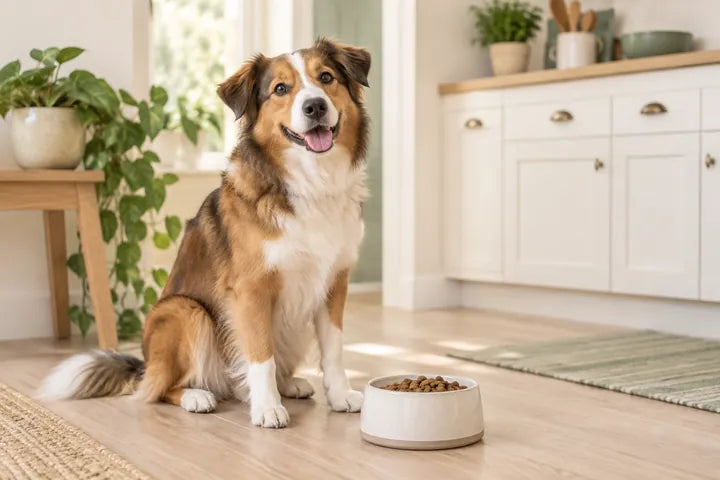
There is no single right answer that fits every dog — the right amount depends on the food, your dog’s age, weight, activity level, and metabolism. The reliable way to find it is to start with the feeding guide on the package, measure portions accurately, and then adjust based on your dog’s body condition over a few weeks. Weighing your dog regularly and looking at its shape tells you far more than any chart.
Start with the bag — but read it correctly
The feeding chart on dog food is a starting estimate for an average dog of a given weight, and it is usually shown in cups per day. Two things to check:
- The chart matches the food’s calorie content — a high-calorie food needs smaller portions than a low-calorie one at the same weight.
- You are feeding the right total for the day, split across meals, not per meal.
If the food lists calories per cup, you can compare foods directly. A typical adult dog needs roughly 20 to 30 calories per pound of body weight per day for maintenance, but this is a wide starting range — activity, breed, and neuter status all move it.
Measure, don’t guess
Use a standard measuring cup or, better, a kitchen scale. Scoops from the bag vary, and “about a cup” drifts over time. If your dog is eating a food that you measure by weight, follow the grams on the label. Small daily overfeeding adds up quickly — an extra quarter cup of a calorie-dense food can mean noticeable weight gain in months.
Adjust by body condition, not just the scale
Once or twice a month, look at your dog from above and from the side:
- You should see a visible waist when viewed from above.
- You should feel ribs easily through a thin layer of fat — like feeling the back of your hand — without seeing them stick out.
- If ribs are hard to feel or there is no waist, cut portions by about 10–15% and recheck in a few weeks.
- If ribs are very prominent and the waist is extreme, increase portions and talk to your vet.
Split meals across the day
Most adult dogs do well on two meals a day, roughly 12 hours apart. Puppies need more frequent meals (see our puppy feeding guide). Splitting the daily amount into two meals helps with hunger, digestion, and behavior, and it makes a dog less likely to bolt food.
Adjust for activity and life stage
- Working and very active dogs may need noticeably more food, and the amount should be adjusted by energy level and body condition.
- Senior and less active dogs often need fewer calories; many gain weight if they keep eating adult portions.
- Puppies need growth food and scheduled meals, with amounts increasing as they grow — usually under your vet’s guidance for large breeds.
- Pregnant or nursing dogs have very different needs; follow your vet’s plan.
Treats count
Treats and chews are food too. A good rule of thumb is to keep treats to no more than about 10% of daily calories. If your dog is getting lots of training treats, reduce meal portions a little to compensate — or use part of the kibble as training rewards.
When to talk to your vet
- Your dog is gaining or losing weight despite what seems like the right amount.
- Your dog always seems hungry, or suddenly loses appetite.
- You have a puppy, a large-breed dog, or a dog with a medical condition.
- You are choosing between foods and want a target calorie plan.
The bag gives you a starting point; your dog’s body gives you the answer. Measure consistently, check the shape monthly, and adjust in small steps — that routine prevents most weight problems before they start.
This article is general guidance, not veterinary nutrition advice. Ask your veterinarian for a feeding plan tailored to your dog.