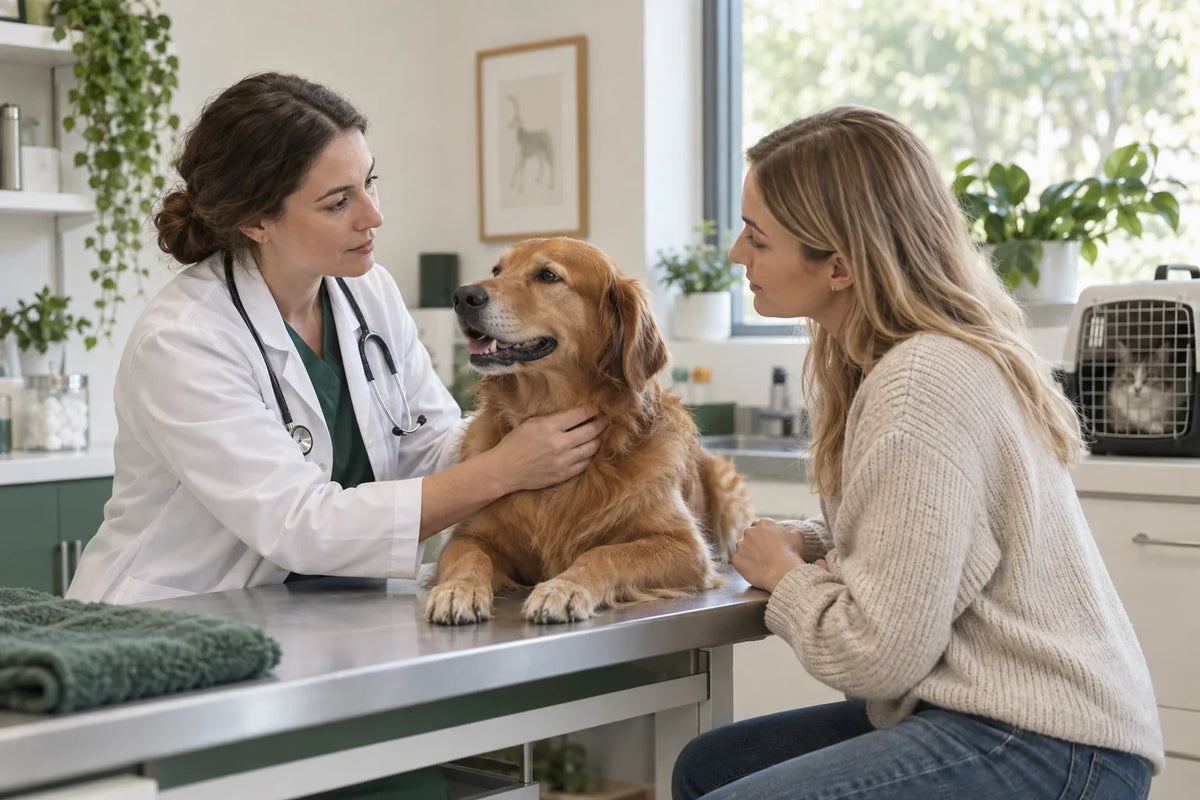
How to do food trial dog owners actually finish comes down to one skill: keeping everything else out. The diet is chosen by a veterinarian, and the result is decided by the discipline in a busy household over several weeks.
This is general education rather than a treatment plan. It focuses on execution, contamination control and interpretation, while the pathway that leads to a diet trial is covered in the site’s companion article on food and environmental allergy.

How to do food trial dog: define the question first
A trial needs a question before it starts. Is the aim to find out whether food contributes to skin signs, to digestive signs, or both?
The answer changes the diet, the duration, and what you measure, which is why the definition belongs with a veterinarian rather than with a shop recommendation.
Write the plan on one page: the diet, the amount, the permitted treats, the duration, the measures, and the review date. Ask what the next step will be in each of the three possible outcomes, because knowing the plan for a negative result makes the period easier to endure. Elimination diets are described in the veterinary literature as a diagnostic procedure, and alternatives exist for cases where the standard approach is impractical, which is a decision that depends on your dog rather than on preference (adverse food reactions and alternatives). Clinical reviews of adverse food reactions in dogs and cats describe how the diagnosis is structured in practice (adverse food reactions review), and studies have looked at elemental diets as a diagnostic option in specific cases (elemental diet for diagnosis).
What should you measure before you change anything?
Measure for one week on the current diet before you switch.
Score the signs you are investigating, whether that is itching by body area, the number and consistency of stools, ear involvement, or episodes of vomiting, and photograph anything visual.
Then write down the current diet in detail, including the brand, the format, the amount, and the feeding times, plus every treat, supplement, and chew in the house. That list is what you will compare against during the trial, and it often reveals overlaps nobody had noticed. Add the medication list with doses and times, because some products contain flavourings that need to be changed before the trial starts. Note sleeping patterns, activity, and appetite as well, since those often change when a dog becomes more comfortable. Keep the record in one place and use the same scoring each day, because the comparison at the end depends on the consistency of the beginning. Current guidance on managing skin disease in dogs and cats treats this structured approach as part of the workup rather than an optional extra (2023 AAHA allergic skin disease guidelines).
Contamination is the main threat to a trial
Contamination rarely comes from the food bag. It comes from the household.
| Source | Risk | Practical fix |
|---|---|---|
| Flavoured tablets and chews | High | Ask the clinic for plain versions before day one |
| Treats, training rewards, food to hide pills | High | Use the trial diet as the reward |
| Other pets’ bowls and leftovers | High | Feed separately and lift bowls immediately |
| Table scraps from family members | Medium | Tell everyone, and keep food off low surfaces |
| Food found outdoors | Medium | Supervise garden time and walks |
Record every deviation, however small, because a single unnoticed mouthful can change the interpretation. If a break happens, tell your veterinarian rather than restarting the clock quietly, since the honest answer may be to extend the trial or repeat it. Keep the trial diet somewhere separate from other food, and label it, because a tired person feeding the wrong bag at 7 a.m. is a realistic risk. Toothpaste, dental chews, and some joint products are also sources of protein and flavour that owners do not think of as food, and chewing toys with edible coatings belong on the same list.
What to do at home this week
Prepare before you start, rather than adjusting as you go.
Buy the full diet for the planned period if storage allows, set aside a container for rewards, brief everyone in the household, and move any other pet food out of reach.
Then start with a defined transition: some plans begin immediately, while others mix the new diet in over a few days. Ask which applies to your dog, because a rapid change can cause digestive upset that is easily mistaken for a reaction to the diet. Keep the routine stable in every other respect, including walking times and bedding, so the only variable is the food. Continue parasite control as advised, since flea allergy can mimic the same signs. Take weekly photographs of the areas you are scoring, and keep the daily log short enough that you will actually complete it. If your dog steals food or eats something unexpected, note the date and continue, then mention it at the review. Clinical guidance for allergic skin disease in dogs and cats treats this level of household control as part of the diagnostic plan (2023 AAHA allergic skin disease guidelines).
When the trial needs veterinary supervision
Supervision is required rather than optional, because the diet, the duration, and the interpretation all depend on the case.
Call the clinic during the trial if your dog develops vomiting, diarrhoea, significant weight loss, or a worsening of the signs being investigated, and do not wait for the review date in those situations.
Ask about managing the signs during the trial, because a dog with severe itching may need treatment for comfort, and those treatments have to be chosen so they do not confuse the result. Ask what to do if a mistake happens, and ask how to handle social situations such as visits or training classes where food appears. If the diet is not accepted, tell the clinic rather than switching products independently, because the replacement has to meet the same requirements. For dogs that also have digestive signs, the site’s guide to finding food that fits a sensitive stomach explains when diet is the right tool and when it is not.
Reviewing whether the result means anything
At the review, three outcomes are possible, and each leads somewhere different.
If the signs improved and the diet was never broken, the trial was successful, and the next step is usually a planned challenge to confirm the trigger rather than simply staying on the diet forever.
If the signs did not improve and the diet was never broken, food is less likely to be the cause, and attention turns to environmental allergy, parasites, or another condition. If the diet was broken, the result is inconclusive, and the honest options are to repeat the trial or to reassess the approach. Bring the log, the photographs, and the diet packaging, and ask what the result supports and what it does not. Long-term diet decisions should follow the challenge rather than the trial alone, and the site’s article on separating food and environmental allergy explains why the sequence matters.

If you want the wider framework for judging products used alongside a diet plan, read the site’s pet supplement safety guide.
FAQ
What breaks a food trial most often?
Unplanned food and mistakes in the household break trials more often than the diet itself. Flavoured medication, dental chews, food used to hide tablets, scraps from the table, another pet’s bowl, and food found outdoors are the usual culprits. Keeping a written log of every deviation, even a small one, is what lets a veterinarian judge whether the result is interpretable or needs repeating.
How long does a food trial need to run?
The length depends on the signs being investigated. Skin problems usually need several weeks to eight weeks because skin takes time to recover, while digestive signs may be assessed over a shorter period. Your veterinarian should set the duration, along with a review date, before the trial begins. Ending early is the most common reason a trial produces no usable answer.
Do all pets in the household need to change food?
Not necessarily, but the trial diet must be the only food reaching the dog being tested. That usually means feeding pets separately, picking bowls up immediately, and supervising outdoor time. If another pet eats the trial diet, that is usually fine, although it can become expensive. The important rule is one direction: nothing except the trial diet goes into the dog being assessed.
What happens after a successful trial?
A successful trial is usually followed by a planned challenge, in which the original diet or a specific ingredient is reintroduced to confirm the trigger. That step should be arranged with your veterinarian, and it is often done at home with clear instructions. Without a challenge, the result shows an association rather than a confirmed cause, and long-term dietary planning is harder to justify.