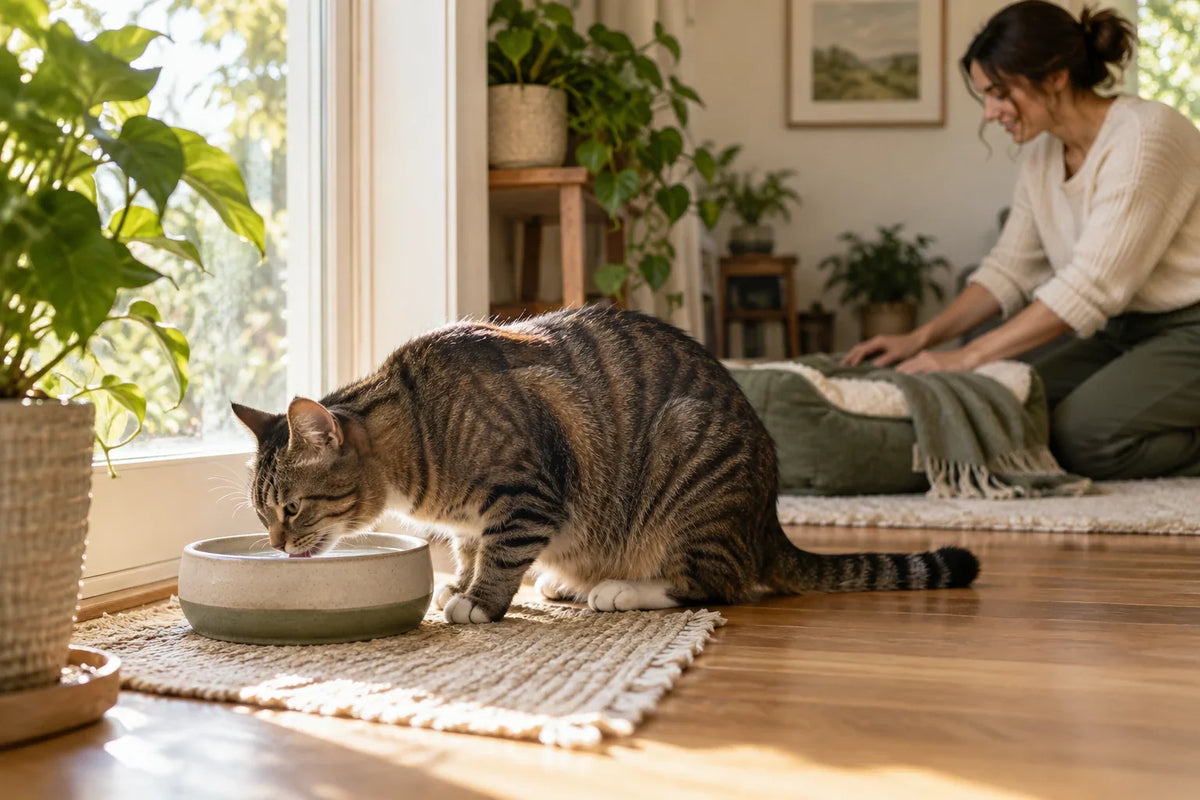
Cat not eating for a day is worth taking seriously, because cats do not fast the way people do it on purpose. A cat that skips one meal and then asks for dinner is usually fine, but a full day without food is one of the earliest signals that something has changed, and it often appears before any obvious symptom.
This is general education and not a diagnosis for your cat. The aim here is to help you work out how urgent the change is, what you can safely check at home, and what to say when you call a clinic.

Why a day without eating matters more in cats than in dogs
Cats evolved as small hunters that eat many small meals, and their bodies handle gaps between meals differently from dogs that scavenge. When a cat stops eating, the body starts moving fat stores to the liver, and a cat that is already thin, older, or unwell can develop liver problems after only a few days of poor intake.
Appetite is also one of the first things to change when a cat is sick. Cats are good at hiding discomfort, so owners often notice the empty bowl before they notice anything else. A full day of nothing is therefore treated as a clinical sign rather than a fussy phase. If your cat is also hiding or sleeping more, the change is more meaningful, and the Merck Veterinary Manual lists poor appetite among the general signs of stomach and intestinal disease in cats.
Cat not eating: how do you tell refusal from reduced intake?
Refusal is easier to see than to measure, so measure it.
Write down the amount offered and the amount left, by weight or by spoonful, because many cats eat half their usual portion for a day or two and still look completely normal.
Watch the bowl rather than the cat. Some cats take a few bites, walk away, and come back later, which results in a much smaller total intake without any obvious refusal. Others sit by the bowl and eat nothing at all. Weigh the food if you can, or use a measuring cup and note what is left. Then look at the pattern over 24 hours: a cat that ate nothing, a cat that ate a third of the usual amount, and a cat that is eating normally but losing weight are three different reports, and they point a veterinarian in three different directions. Owners are usually accurate about whether a cat seems interested in food, and far less accurate about quantity, so the number matters when you call. International Cat Care’s cat advice library covers appetite changes alongside other household signs.
Physical checks you can do safely at home
You can gather useful information without stressing your cat, and that information is what makes the phone call to a clinic productive. Work quickly, keep the room quiet, and stop if your cat becomes frightened, because a stressed cat is harder for a veterinarian to assess later.
- Look at the gums: pale, grey, or yellow colouring is worth reporting immediately
- Gently pinch the skin between the shoulder blades and see whether it drops back
- Feel along the jaw and neck for swelling, and look inside the mouth if you can do it without a struggle
- Check the eyes for discharge, squinting, or a change in the third eyelid
- Note the litter box: urine clumps, stool, and any diarrhoea or straining
- Take a short video of your cat walking, and of any odd breathing or head position
What do dehydration signs look like on a cat?
Dehydration shows in the skin and gums.
The skin test is a rough screen rather than a measurement, and it is unreliable in older cats or overweight cats, so use it alongside what you are seeing in the litter box.
Press gently on the gum above a tooth and let go, then count how long the colour takes to return; a slow return is worth mentioning. Look at the litter box for fewer or smaller urine clumps than usual, which suggests less going in. A dehydrated cat may also sit in a hunched position, avoid being picked up, or stop grooming. Remember that cats get much of their water from food, so a cat that has stopped eating is also likely to be taking in less fluid, and that combination is one of the reasons a day without food is taken seriously. Do not syringe water into your cat’s mouth; it risks choking and gives a false sense of how much fluid went in, and the AAFP practice guidelines treat hydration support as a clinical decision rather than a home one.
Food, stress or illness: narrowing the cause
Before you assume illness, rule out the simple explanations, then watch for the ones that are not simple. A new food, a new bowl, a moved feeding station, a new pet, visitors, building work, or a recent trip to the vet can all reduce appetite for a day in a sensitive cat.
If your cat is eating treats but not meals, that points toward a textural or flavour preference rather than complete appetite loss. If your cat is ignoring everything, including the food they normally steal, that is a different report. Changes to the food itself can also matter: some cats refuse a bowl that has been sitting out, and wet food that has dried at the edges is often left behind. Review the timeline honestly. Ask yourself what changed in the last three days, and write it down, because the answer is often something an owner would not think to mention. Then check the other signals listed in this article, and treat any of them as a reason to call rather than wait.
What to bring to the appointment
Bring numbers and dates rather than impressions, because appetite is hard for a veterinarian to reconstruct from a phone description. Note when your cat last ate normally, what they have eaten since, and whether any food has stayed down. If you use a litter box, count the urine clumps for the last 24 hours.
The clinic may also ask whether your cat takes any medication or supplement, whether you have changed the diet recently, and whether there has been vomiting, diarrhoea, or any weight change over the last few months. Bring the bag or label of the food you feed, plus any treats, since these details are part of the history. If pills are needed, the site’s guide to giving a cat a pill may help after the appointment. If your cat is due for routine care, ask whether the appointment can cover both things at once.
Red flags that skip the wait
Some cats should not be watched for another day. Call now, or go to an emergency clinic, if any of the following apply.
- Nothing eaten for 24 hours, or no food and very little water for 12 hours
- Any vomiting or diarrhoea alongside the appetite loss
- Breathing that is fast, open-mouthed, or laboured
- Yellow gums or eyes, collapse, a seizure, or a sudden inability to use the back legs
- Straining in the litter box with little or no urine produced
- A known access to human medicine, lilies, antifreeze, or another toxin
An important limit belongs here too: repeated appetite loss is a reason to look for the underlying cause rather than to keep trying new foods. The 2022 feline consensus guidance on managing the inappetent cat treats poor intake as something to assess and support rather than to wait out indefinitely, and the Cornell Feline Health Center publishes owner-level material on the conditions that most often sit behind it.

If you are not sure whether this is a wait-and-see question, the site’s FAQ collects the questions owners ask most often before they call a clinic.
FAQ
When should I worry about my cat not eating?
Worry at the 24-hour mark rather than at hour six. A cat that skips one meal and then eats normally is usually fine, but a full day without food, or a cat that has stopped eating while also hiding, sleeping more, or drinking differently, deserves a phone call to a veterinarian that day. Cats that are already unwell lose appetite quickly, so the change matters more than the reason seems to.
How long can a cat safely go without eating?
There is no safe target to aim for. Healthy cats can manage brief gaps, but appetite loss in a cat is treated as a clinical sign rather than a diet choice, and weight loss in cats is a recognized risk factor for fatty liver. Because of that risk, most veterinarians want to hear about a cat that has eaten nothing for a full day, and sooner if the cat is older, thin, or unwell.
My cat is not eating but still drinking water. Is that better?
Drinking while refusing food suggests something is off, but it does not make the situation safe. Some cats drink more when they feel nauseated, when their kidneys or thyroid are involved, or when a fever is present. Keep track of how much water goes in and how much urine comes out, note any litter box changes, and report both numbers to the clinic.
Should I tempt a cat with tuna or treats while I wait?
A small amount of a strong-smelling food can answer one useful question, which is whether your cat is interested in food at all. Warm a spoonful of their usual food, or offer a plain cooked chicken bite, and see what happens. Do not switch the whole diet, do not add human seasonings, and do not keep offering treat after treat, because the change in diet can confuse the picture you are reporting.