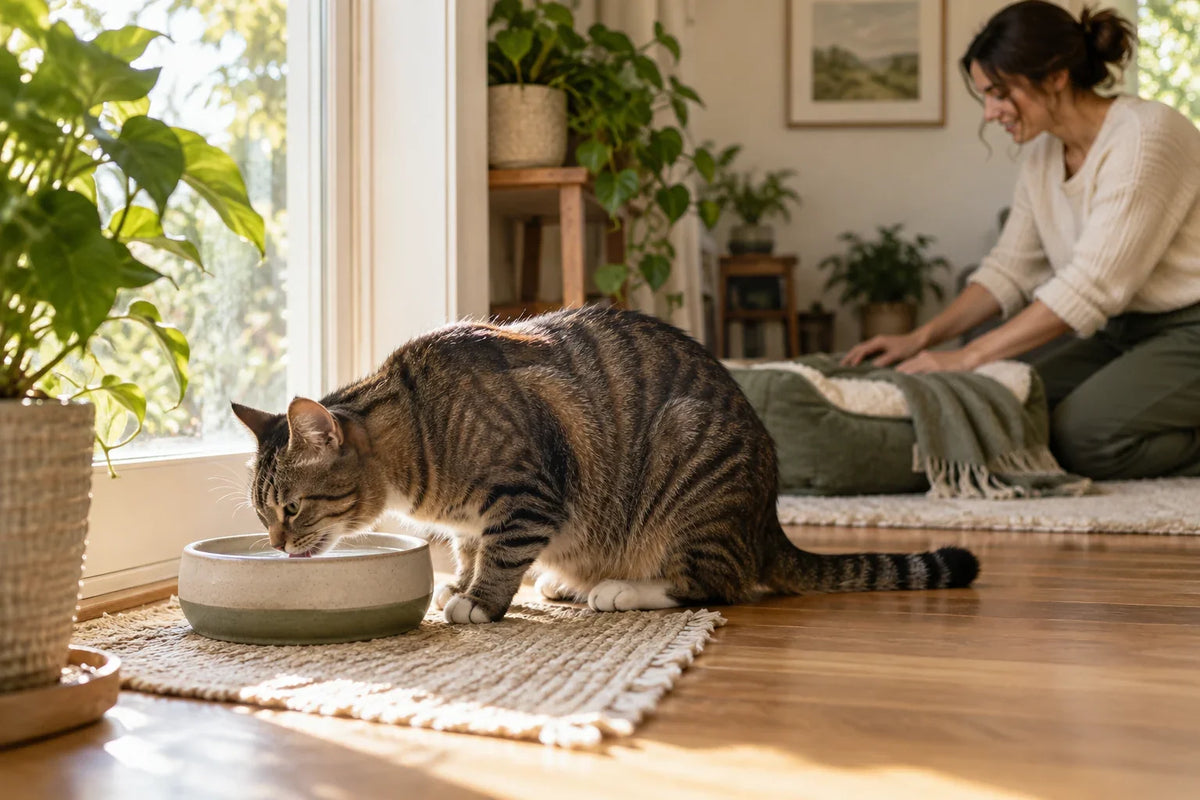
Cat lethargic behaviour rarely looks dramatic, which is exactly why it gets missed. Cats sleep for much of the day, so the useful question is not how much your cat sleeps, but how far today differs from last week.
This is general education rather than a diagnosis. The aim is to help you spot a genuine change from baseline, check what can be checked safely at home, and judge when a same-day call is the right move.

Why owners usually notice the wrong thing first
Owners tend to look for pain, crying, or limping, and cats rarely offer any of those. What cats do instead is shrink their world: fewer jumps onto the windowsill, longer naps in one spot, less grooming, and a quieter response when you come home.
That is why a change in routine is the most reliable early signal. A cat that used to meet you at the door and now stays on the bed is giving information. A cat that skips the top of the cat tree and stays on the floor is giving information. Because cats hide illness well, these small shifts are often the first visible sign of a problem that has been developing for a while. Recording what you see for a day or two turns a vague worry into a report a veterinarian can work with, and it helps you notice whether the change is improving or worsening. Write down what your cat did today, not what you think it means.
What does a change from baseline actually look like?
Baseline means your cat’s own normal.
Use three markers that owners can judge without equipment: how often your cat moves between spots, whether they greet food and people the way they usually do, and whether grooming habits have changed.
Then add detail. Does your cat still jump to the usual high places? Are they sleeping in a different posture, more hunched than stretched out? Are they still following the sun around the room? Is the response to a familiar sound slower than it was? A cat that normally asks for food twice in the morning and does not ask at all is showing a change worth noting. Cats that feel unwell also often seek somewhere quiet and warm, so a new favourite hiding place can be a symptom rather than a preference. Compare with a week ago rather than with this morning, because small day-to-day variation is normal in every cat.
Hiding, posture and grooming changes
Three visible behaviours are worth checking carefully: where your cat hides, how they sit, and how well they are keeping up with their coat. Hiding under a bed is not a problem on its own, but a cat that suddenly chooses the back of a wardrobe for a whole day is telling you something.
Posture matters too. A hunched position with the head low and the front legs tucked under the chest is a common way that cats hold themselves when the abdomen or the spine is uncomfortable. Grooming is a useful gauge because it is a daily habit: greasy fur, dandruff, or a coat that looks dull and clumped suggests your cat has stopped keeping up. The opposite change is also a signal, since cats that overgroom often do it because something itches or hurts. Look at the belly and the inside of the back legs, which are the areas owners see least, and check for bald patches that were not there a month ago.
What do eating, drinking and the litter box tell you?
Those three habits tell you more than behaviour alone.
Count urine clumps, note how much water goes down, and weigh the food if your cat is not finishing meals, because intake and output together describe hydration and kidney function.
A cat that is lethargic and eating normally is a different report from a cat that is lethargic and has stopped eating, and both are different from a cat that is eating but losing weight. Sudden thirst with heavy urination is a classic pattern that deserves prompt attention. Straining in the litter box with little or no urine produced is an emergency in male cats, because a blockage can become life-threatening within hours. Diarrhea, vomiting, or constipation all need to be mentioned alongside the tiredness. If you use clumping litter, counting clumps over a day is the simplest home measurement available, and it takes no skill beyond note taking. Bring those numbers to the appointment instead of a general description.
Pain in cats looks like quiet, not crying
Cats in pain usually go quiet rather than vocalize. They may stop jumping, sit with a stiff posture, avoid being picked up, and reduce grooming to the areas they can reach.
Arthritis is common in older cats and is regularly mistaken for normal ageing, which is one reason a persistent change in activity deserves a proper examination rather than acceptance.
Look for a cat that hesitates before a jump, lands heavily, or asks to be lifted onto a favourite spot. Those details describe function rather than mood, and they are exactly what helps a veterinarian decide whether to look for joint disease, dental pain, or something else. Cats with dental pain often eat on one side, drop food, or avoid hard kibble while still eating. Cats with abdominal pain may sit hunched and resist being stroked along the belly. None of these signs tell you the diagnosis at home, and they are not meant to. Their value is that they turn a vague impression of tiredness into specific observations you can describe.
Cat lethargic: when a same-day call is the right move
Call today rather than waiting if the change has lasted more than a day, if it is clearly different from anything you have seen before, or if it comes with any other change in eating, drinking, breathing, or litter box habits.
Some signs mean go now rather than call: fast or laboured breathing, open-mouth breathing, collapse, a seizure, straining to urinate with no urine produced, a painful swollen belly, or gums that look pale, blue, or yellow.
Cats decline quickly once they are genuinely ill, and they are good at concealing it until they cannot. A telephone conversation costs little and often produces a clear instruction about whether to come in. When you call, have your notes ready: how long the change has lasted, what has changed, what your cat is eating and drinking, the litter box output, any medication or supplement, and whether the cat has been outside or in contact with other animals. If there was a stressor such as a move, a new pet, or building work, mention that too, since stress responses in cats are measurable and can look identical to illness at home (stressors in domestic cats).
What to note down for the vet
Bring a short written summary rather than a long story, and put the timeline first. State when you first noticed the change, whether it has been steady or worsening, and what your cat is doing differently today compared with a week ago.
Include the practical items: appetite, water intake, urine and stool output, weight if you know it, current medications and supplements, vaccinations, and any recent treatments. A video of your cat walking, jumping, or breathing is often more useful than a description, so take one while the behaviour is happening. If your cat is hard to medicate, say so in advance, because the clinic may suggest a different formulation. The Merck Veterinary Manual covers routine care and health checks for cats and lists fever of unknown origin among the conditions that present as a quiet, flat cat. The Cornell Feline Health Center and International Cat Care both publish owner-level guidance on age-related conditions. For help with medication technique after the visit, the site’s guide to giving a cat liquid medicine walks through the practical steps.

If your cat’s quiet spells keep coming back, the FAQ covers the questions owners ask most often before they call a clinic.
FAQ
When should I be concerned about my cat’s lethargy?
Be concerned when your cat is clearly not themselves for more than a day, or when lethargy appears with any other change such as not eating, hiding, breathing faster, vomiting, or litter box changes. A single quiet afternoon after a stressful event is common. A cat that stops grooming, sits hunched, or avoids normal contact is telling you something different, and that deserves a same-day phone call.
What does lethargy look like in a cat compared with just sleeping?
Sleeping cats are relaxed and wake for food, play, or you. A lethargic cat sleeps in the same spot, may sit hunched rather than stretched out, and does not return to normal routines. Look at the whole day: fewer trips to the bowl, less grooming, no jumping onto usual spots, and a changed response when you call. Comparing today with last week tells you more than comparing against a general idea of normal.
Should I leave my lethargic cat alone to rest?
Quiet is fine, but isolation is not the goal. Keep your cat warm, offer food and water in the usual places, and check on them without forcing interaction. Offer water close to where they are resting if they are not moving much. Write down what you see over a few hours, because that record is what helps a vet decide whether the cat needs to be seen today. Never give human medication to a cat.
Can stress alone make a cat lethargic?
Yes, stress can flatten a cat’s behaviour, and research on domestic cats shows measurable behavioural and physiological responses to stressors. Common triggers include new pets, visitors, building work, a changed routine, or a recent clinic visit. Stress-related change usually improves within a day or two once the trigger settles. If it lasts longer, or if eating, drinking, or the litter box changes, treat it as a medical question rather than a mood.