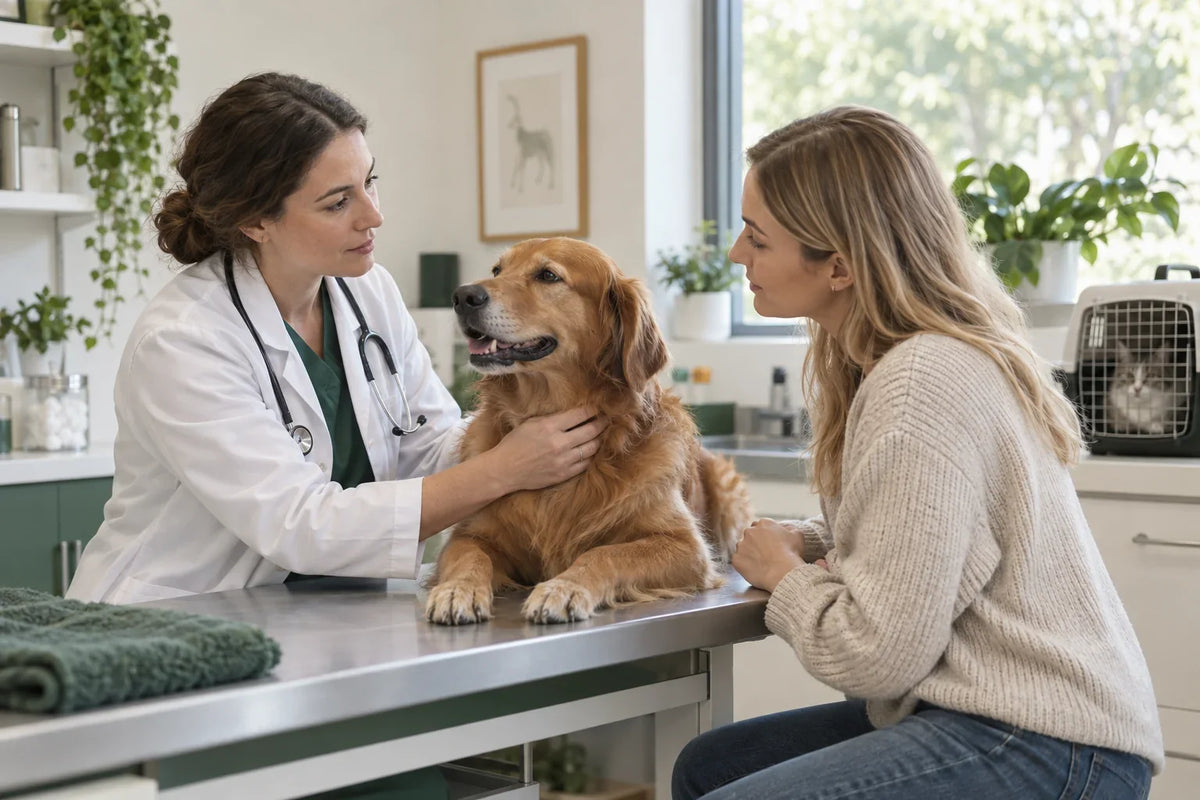
Dog vet anxiety is usually treated as a problem to solve in the waiting room, which is the one place it cannot be solved. The practice happens at home, in short sessions, long before an appointment is needed.
This is general education rather than a training programme. It explains the steps that build tolerance, what to measure, and how to involve the clinic rather than working against it.

Dog vet anxiety: the visit is not the practice session
Fear at the vet is usually built from several experiences: the car, the waiting room, being handled by strangers, and sometimes a painful procedure. Each element can be practised separately.
The appointment is the worst place to teach tolerance, because everything happens at once and the dog has no way to stop it, which is why preparation happens at home and in low-stakes visits.
A useful way to think about the plan is to separate the components: the car journey, entering the building, standing on a table or mat, being touched on the ears, mouth, paws and belly, and the presence of unfamiliar people. Each can be practised in small doses with food involved. Clinics vary in how much they can adapt, and many are willing to reduce waiting time, examine a dog on the floor, or schedule a visit that only involves a weigh-in. Behaviour problems in dogs, including fear responses, are described in the Merck Veterinary Manual, and reviews of fear-related problems describe how behavioural work and treatment are combined (therapy and prevention of noise fears in dogs), and routine care guidance explains what the examination involves (routine health care of dogs).
What should you measure before you change anything?
Score the reaction at each stage.
Note how your dog behaves when the lead comes out, in the car, in the car park, in the waiting room, and during handling, because the pattern identifies which part of the sequence to work on first.
Record the specific signs, including panting, drooling, trembling, freezing, pulling away, lip licking, and refusal of food, and note whether they appear before or after the building. Add how long the recovery takes, since a dog that is normal in the car afterwards has less to work on than one who is unsettled for the rest of the day. Film a short clip of your dog in the waiting room if your clinic allows it, because video helps a professional see what to change. Note what has already been tried, including any medication, and whether it changed anything. Keep the log for two visits before adjusting the plan.
Which practice steps come first?
Work on the easiest component first.
Success early makes the rest easier, so the table below lists the components in the order that usually produces progress fastest.
| Component | Practice at home or low-stakes visits | What to avoid |
|---|---|---|
| Handling | Touch ears, mouth, paws and belly with food, in seconds | Restraint before tolerance is built |
| Standing on a surface | Practise on a stable mat or table with rewards | Slippery surfaces that add fear |
| The car | Short trips to fun destinations | Car trips only to the clinic |
| The building | Walk past, then enter for a treat and leave | Long waits in a busy waiting room |
Pair everything with food the dog genuinely likes, and keep sessions to a minute or two. Ask the clinic whether you can book a happy visit, arrive outside peak hours, or wait in the car until the room is ready. If your dog is fearful enough that handling is unsafe, ask about pre-visit medication rather than attempting the visit unmedicated, since veterinary treatment is often part of a behaviour plan and is used alongside training rather than instead of it, as clinical reviews of anxiety treatment generally describe (treatment and management of separation anxiety). Behaviour professionals can help design the programme, and directories such as the International Association of Animal Behavior Consultants list practitioners.
What to do this week
Start with handling at home, because it costs nothing and it transfers directly to the examination.
Touch your dog’s ears, lift a lip, handle a paw, and run a hand along the belly, pairing each with food and stopping after a few seconds, then repeat daily in different rooms.
Practise standing still on a mat in return for rewards, and if your dog will tolerate it, practise stepping onto a low, stable surface. Take a short car trip to somewhere pleasant at least once a week so the car does not predict the clinic. If a visit is coming up, ask the clinic about timing, waiting arrangements, and whether a technician can come to the car to reduce the walk through a busy area. Bring high-value food and a familiar mat or towel. Reduce your own tension where you can, since dogs respond to their owner’s behaviour, and keep the appointment day itself as ordinary as possible. The site’s guidance on recognising signs that need a vet helps you plan visits rather than arriving in an emergency.
When does anxiety need veterinary support?
Ask for support when handling is unsafe.
Also ask if your dog cannot be examined without heavy restraint, if procedures are being declined because of behaviour, or if the anxiety is worsening and affecting care rather than only the visit.
Pre-visit medication is a legitimate part of veterinary practice for anxious animals, and it often makes the appointment faster and less distressing for everyone, which also means better care. Ask what should be given, when, and whether a trial dose at home is advised before the day. Bring your log and tell the clinic which part of the visit is hardest, because that determines what they can adapt. If your dog also struggles with noise, travel, or being alone, mention those problems, since the plan may address several situations together; the site’s article on separation anxiety covers one common combination. Practical home handling skills, such as taking a temperature and checking ears and paws, also reduce how much unfamiliar handling a dog faces.
Reviewing whether visits improved
Compare the stages across several visits rather than deciding after one bad appointment.
Improvement often appears as small changes: less drooling in the car, a dog who takes food in the waiting room, or handling that lasts longer before distress appears.
Recovery time is the most useful long-term measure, because a dog who returns to normal quickly is making progress even if they still dislike the visit. If nothing has changed after consistent practice and clinic-side adjustments, the plan needs professional input, and behaviour support is more effective than persistence. Keep the log and bring it to each appointment, because it tells the clinic whether their adaptations are working. For emergencies, a dog that is already fearful will cope better if the basics are in place, and the site’s guide to a dog first aid kit covers preparation for unexpected situations.

If you want the wider view of behaviour support, the site’s FAQ answers the questions owners ask most often.
FAQ
How do I prepare my dog for a vet visit?
Prepare between visits rather than on the day. Practise handling at home, reward your dog for standing on a stable surface, take short trips past the clinic without going in, and visit for a treat and a weigh-in when your dog is well. On the day, keep your own behaviour calm, arrive with time to spare, and ask the clinic whether you can wait outside or in the car until the room is ready.
Is it bad to comfort my dog at the vet?
Comfort does not create fear, and a calm, familiar presence usually helps. The useful distinction is between reassurance and reinforcement of panic, so keep your own tone steady and avoid changing your behaviour dramatically in response to distress. For a dog with severe fear, comfort alone is not enough, and a treatment plan plus a clinic that can adapt its handling will make more difference.
Can medication help with vet visit anxiety?
Sometimes it is appropriate, particularly when a dog is so fearful that examinations are unsafe or distressing for everyone involved. Medication is used alongside a behavioural plan rather than instead of one, and it needs to be prescribed and timed by a veterinarian. Some options need to be started before the appointment, so raising the problem in advance is essential.
What should I ask the clinic to do differently?
Ask whether you can wait outside or in the car, whether the examination can happen on the floor or on your lap, whether a treat-heavy approach is possible, and whether a shorter visit for one specific task can be arranged. Clinics routinely adapt handling for anxious animals, and asking in advance is far more effective than arriving with a frightened dog and hoping. Bring your dog’s favourite food, and ask if non-slip mats help.