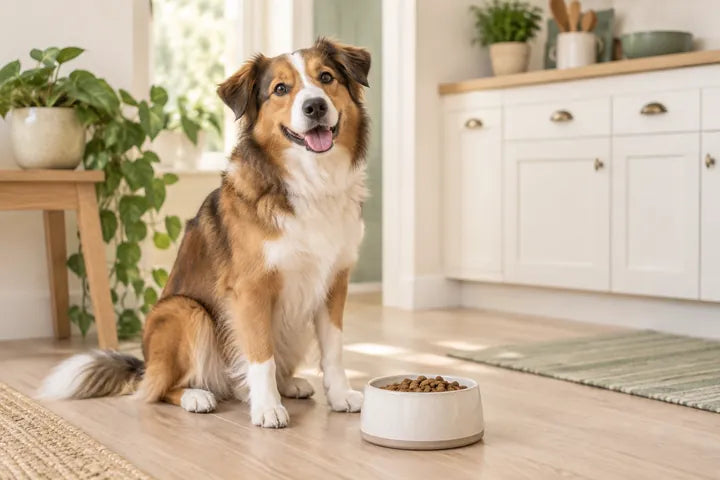
Puppies grow faster than adult dogs, and their stomachs are small, which is why they need more meals per day on a growth-appropriate food. A simple schedule covers most puppies: around four meals a day at 8 weeks, three meals a day from about 3 to 6 months, and two meals a day after that — with exact amounts based on the food’s feeding guide and your puppy’s body condition. Large-breed puppies have their own rules and should follow your vet’s plan.
Meal frequency by age
| Age | Meals per day | Notes |
|---|---|---|
| 8–12 weeks | 3–4 | Small frequent meals; young puppies need regular energy and bathroom breaks after eating |
| 3–6 months | 3 | Reduce to three meals as appetite and stomach capacity grow |
| 6–12 months | 2 | Move to two meals; small breeds may be ready earlier, large breeds may stay on three longer |
| 12+ months | 2 (adult) | Transition to adult food gradually over about a week |
These are guidelines, not laws. Your puppy’s breed, size, and growth rate matter — a Chihuahua and a Great Dane are on very different schedules.
How much per meal
Start with the feeding chart on the puppy food package, which usually shows total daily cups for the puppy’s current weight. Divide that total by the number of meals. Then adjust based on body condition, exactly as you would for an adult dog:
- You should be able to feel the ribs easily but not see them sticking out.
- There should be a visible waist from above.
- If ribs are hard to feel, cut portions slightly; if ribs are very prominent, increase portions.
Weigh your puppy weekly in the early months — growth is fast, and amounts need to move with it.
Feed a growth food, not adult food
Puppy foods are formulated for growth with higher levels of protein, fat, and specific minerals. Feeding an adult food to a growing puppy can lead to nutritional imbalances. Choose a food labeled for growth or “all life stages,” and for large-breed puppies choose a large-breed growth formula — rapid growth in large breeds needs careful control to protect developing joints.
When to switch to adult food
Small breeds often reach adult size around 9–12 months, medium dogs around 12 months, and large or giant breeds anywhere from 18 months to 2 years. Switching too early misses growth needs; switching too late can contribute to weight gain. Your vet can tell you when your puppy has finished the main growth phase. When you switch, transition gradually over 7–10 days by mixing increasing amounts of the new food with the old.
Set a routine that helps house training
Meals on a predictable schedule make house training easier: what goes in on a schedule comes out on a schedule. Take your puppy out shortly after each meal, and praise every successful potty break. Feeding at the same times each day also lets you spot appetite changes early, which is one of the first signs of illness in puppies.
Treats and chews count
Keep treats to about 10% of daily calories, and use a large portion of the daily kibble for training rewards when your puppy is learning. Too many extra treats in a small puppy can add up fast and teach picky eating.
When to call your vet
- Your puppy skips more than one meal or is not gaining weight
- You have a large-breed puppy and want a growth plan
- Your puppy vomits after meals or has ongoing diarrhea
- You are choosing between puppy foods and want guidance
A predictable feeding schedule, a growth food, and weekly weight checks cover most of what puppies need — and your vet fills in the rest for your puppy’s specific size and breed.
This article is general guidance, not veterinary nutrition advice. Ask your veterinarian for a feeding plan for your puppy, especially if it is a large or giant breed.